
Dad tip
When to Stop Swaddling: Signs of Rolling and How to Transition
Stop swaddling the moment your baby shows a sign of trying to roll over.
It is about signs, not a birthday: a few babies begin working on rolling around 2 months, and the timing varies from baby to baby.
General info, not medical advice. Your OB, midwife or pediatrician knows your situation; check with them. Learn more about our medical disclaimer
- Signs, not a date
- Back only
After the swaddle, the sleep rules stay the same: on their back, in a bare crib, on a firm, flat surface.
Signs of rolling, and how to move on
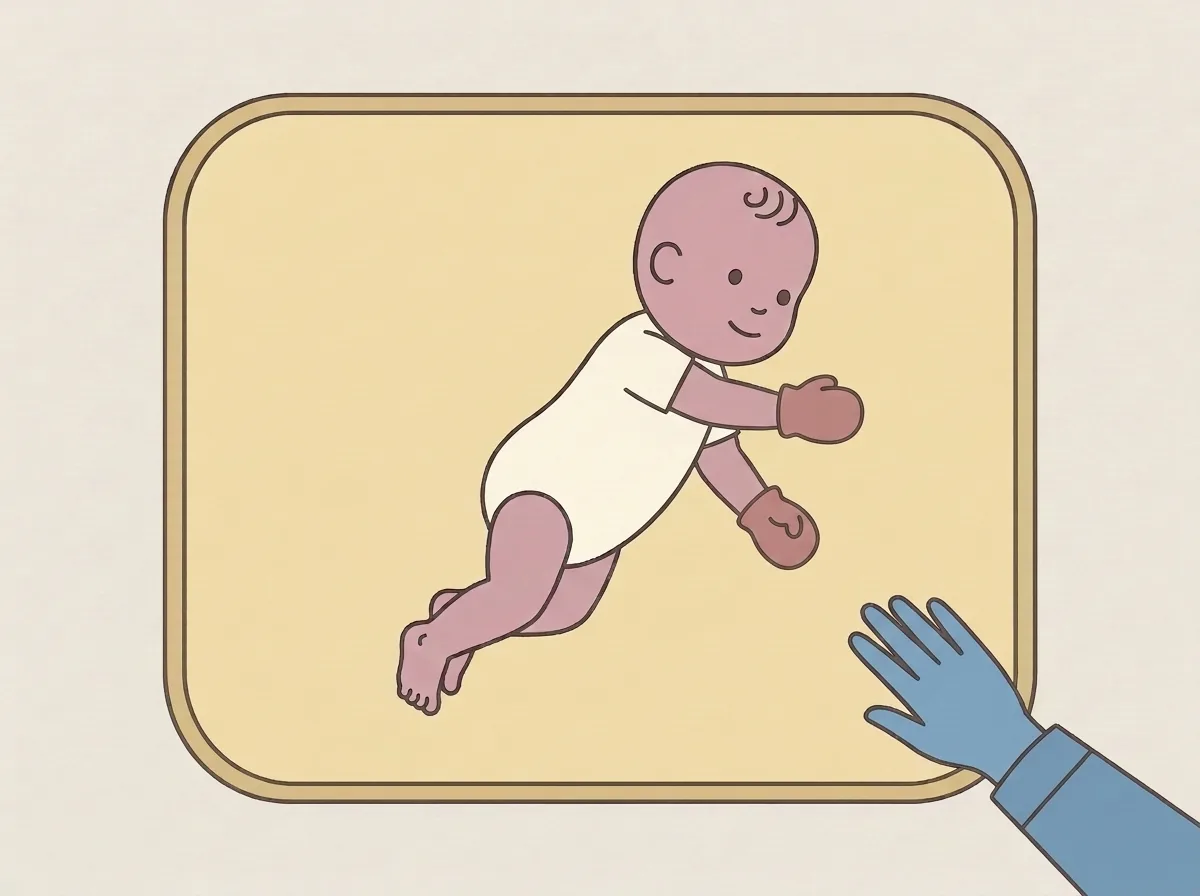
Awake, on a firm, flat mat, and watched. Tummy time is for awake play only. Step 1
Watch for the signs
- Check every day, most easily during awake tummy time on a firm, flat floor. One sign is enough to stop swaddling.
- Turning onto their side. A half-roll is often how rolling starts.
- Pushing up on their hands, which shows their head and neck control is building.
- Rocking on their tummy, or lifting their arms and legs in a "swimming" movement.
- Breaking out of the swaddle. A baby who keeps getting free may be getting ready to roll.
Note: If you are not sure whether something is a sign, ask your pediatrician.
Step 2
Stop swaddling at the first sign
- Do not wait for a roll, a date or a milestone. Swaddling stops for naps and for nights.
- The AAP says the risk of suffocation is higher if a swaddled baby rolls onto their stomach. That is why you stop at the signs, before the roll.
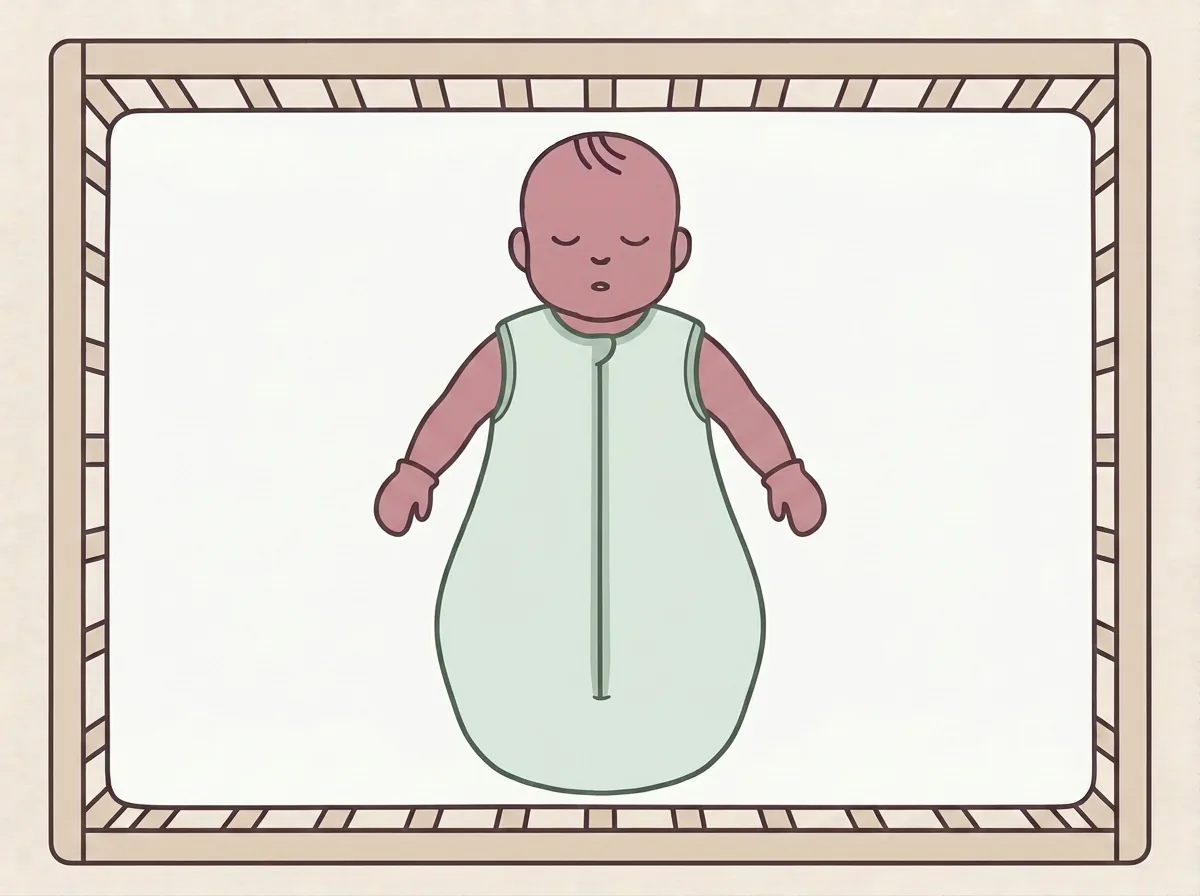
Arms free, roomy legs, bare crib. Step 3
Move to a sleep sack that lets the arms move
- Choose a sleep sack with armholes that does not hold your baby's arms, chest or body. The AAP says a sack like that is fine to keep using.
Step 4
Keep sleep safe, every time
- Start every sleep on their back, in a bare crib on a firm, flat surface. Once your baby rolls both ways on their own, you do not need to keep turning them back.
Swaddle or sleep sack?
They are not the same thing. What matters is whether the arms are held.
| Swaddle (blanket or wrap) | Sleep sack that lets baby move | |
|---|---|---|
| What it is | Swaddle (blanket or wrap):Holds the arms and chest snug. | Sleep sack that lets baby move:A wearable blanket with armholes. Arms and legs can move freely. |
| After the first signs of rolling | Swaddle (blanket or wrap):Stop. | Sleep sack that lets baby move:Fine. The AAP says it is fine to keep using. |
| Keeping warm | Swaddle (blanket or wrap):Can raise the chance of overheating. | Sleep sack that lets baby move:Preferred over loose blankets to keep a baby warm. |
A sleep sack that squeezes the arms, chest and body counts as a swaddle. Stop that kind at the first signs too.
What the sources say about stopping
AAP. Stop once your baby shows signs of trying to roll over. A few babies begin around 2 months, and the timing varies from baby to baby.
AAP, safe sleep. Typical rolling shows up at about 3 to 4 months, though some babies get there sooner.
Children's Healthcare of Atlanta. Stop when your baby starts breaking free of the blanket or trying to roll over.
KidsHealth. Stop at signs of starting to roll, like turning onto their side.
The common thread is signs, not a birthday. If your baby has shown none and you are not sure when to stop, ask your pediatrician.
Safety
- Back only, every sleep, naps too. Stopping the swaddle does not change this.
- Keep the crib bare. A sleep sack replaces blankets. Loose blankets, pillows, bumpers and soft toys stay out.
- Nothing weighted. No weighted sleep sacks, swaddles or blankets.
- Your pediatrician comes first. If they give you different advice, follow theirs.
Rolling-signs check
Tick what you see. One tick is enough to stop swaddling. Your ticks stay on this screen only. Nothing is saved or sent.
Want this check to come to you at the right time, and to be shared with your partner? That is what the app does.
Get the free appNeed the swaddle steps?
This page is about stopping. The steps, the hip rules and the safety checks for swaddling are on the swaddle page.
How to swaddle a babyYour part
Share the watching. Tell your partner what the signs look like, and agree who checks on which days. Whoever sees a sign, the swaddle stops for both of you.
Questions dads ask
When should I stop swaddling?
As soon as you see a sign your baby is trying to roll over, whatever their age. The AAP notes that a few babies begin around 2 months, and another AAP page puts typical rolling at about 3 to 4 months, with some babies earlier. Check for signs every day, and ask your pediatrician if you are unsure.
Signs of rollingWhat is the swaddle transition?
It is the move from a swaddle to sleeping with the arms free, usually in a sleep sack. The sources describe a switch, not a schedule: stop at the first signs of rolling and use a sack that does not hold the arms.
The four stepsIs a sleep sack the same as a swaddle?
No. A swaddle holds the arms and chest, and a sleep sack that does not swaddle lets your baby move freely. The AAP says a free-moving sack is fine to keep using, but any sack that squeezes the arms, chest and body should stop at the first signs of rolling.
Swaddle or sleep sackHow do I move to arms out?
Switch to a sleep sack with armholes at the first signs of rolling. The AAP says a sack that lets your baby move freely is fine to keep using. Some online guides describe taking one arm out first. We found no guidance for it in the AAP, CDC or children’s hospital pages we checked, so we do not give steps for it. Ask your pediatrician if you would like a gradual approach.
See step 3What are the signs my baby is about to roll over?
Look for turning onto the side, pushing up on the hands, rocking, lifting the arms and legs, or breaking out of the swaddle. These mean rolling may be close, so stop swaddling when you see one. Watch during awake tummy time on a firm, flat surface.
All the signsSources
- AAP (HealthyChildren.org): Swaddling: Is it Safe for Your Baby?
- AAP (HealthyChildren.org): How to Keep Your Sleeping Baby Safe: AAP Policy Explained
- CDC: Providing Care for Babies to Sleep Safely
- International Hip Dysplasia Institute: Swaddling Education
- Children's Healthcare of Atlanta: How to Safely Swaddle Your Baby
- Nemours KidsHealth: Swaddling Your Baby
- Cleveland Clinic: When Babies Start To Roll Over (and How To Encourage It)
- Seattle Children's: Crying Baby, Before 3 Months Old
Medical disclaimer: General info, not medical advice. Your OB, midwife or pediatrician knows your situation; check with them. If something feels wrong, don't wait on an app. Call your provider, or 911 in an emergency. Read the full medical disclaimer
Want week-by-week guidance?
Get week-by-week briefings, task management, and a full parenting toolkit built for dads who refuse to wing it.
Get started free